Thriveherd blog
Get practical insight on career change, confidence and purposeful work.
Short, thoughtful emails without noise. Unsubscribe anytime.
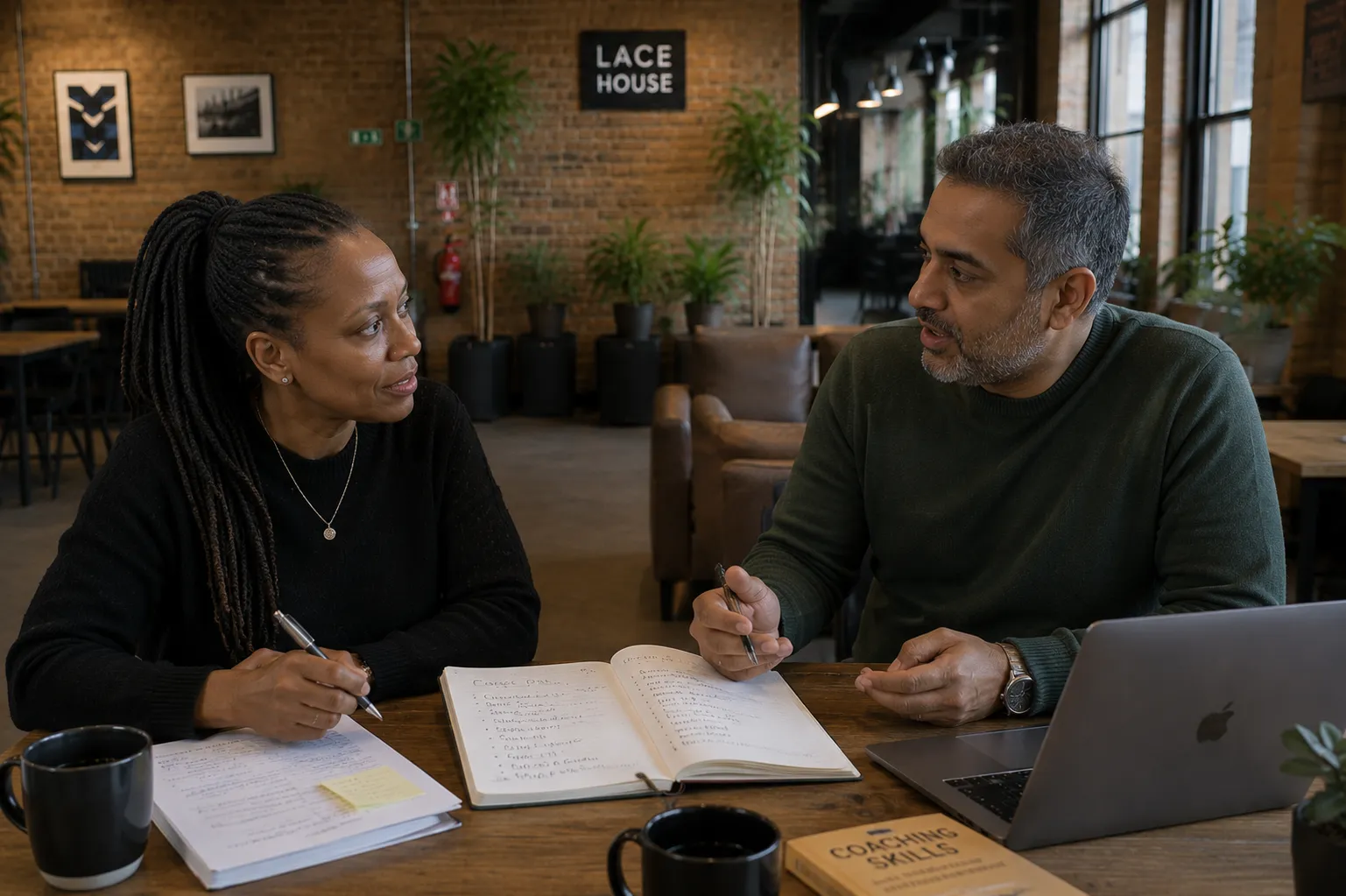
Learning circles are regular, facilitated peer-learning cohorts where managers and leaders reflect on live workplace challenges, test their judgement and translate development into changes in day-to-day practice. Used within a management or leadership-development programme, they give people a structured place to work through the situations that do not fit neatly into a workshop exercise or performance conversation.
For organisations, a learning circle is not a standalone networking group or an informal talking shop. It is a practical bolt-on to wider development activity, helping managers return to the realities of their roles between formal sessions, learn from colleagues beyond their immediate team and stay accountable for applying what they are learning. Below, we explain what makes a circle useful, where it fits alongside coaching and workshops, and how to set one up so it supports meaningful development at work.
An organisational learning circle is a regular peer group with a shared intention to learn from real leadership and management situations. It is different from informal networking, a one-off workshop or a project meeting. Participants may come from different functions, business areas or levels of leadership, but there needs to be enough shared context for people to understand the pressures, choices and trade-offs being discussed.
The useful part is not simply having capable people in the room. It is the quality of attention the group gives one another. A well-facilitated circle makes room for uncertainty without turning every meeting into a complaint session or a round of quick fixes.
Most worthwhile groups have a few clear features:
Some circles use a consistent format: a brief check-in, one participant’s live issue, questions from the group, then reflections and agreed actions. Skilled facilitation helps the discussion stay useful, ensures airtime is shared and prevents the group being captured by whoever has the most to say. The structure need not be rigid. It simply creates enough focus for people to think properly.
A learning circle is not group therapy, uncontained workplace venting or a forum for one confident person to dispense answers. Its value lies in helping managers and leaders notice patterns, assumptions and possible responses that are harder to see when they are inside a demanding working routine.
Formal development can introduce useful models, build knowledge and create time away from everyday demands. The challenge is often what happens afterwards. Managers return to competing priorities, established team dynamics and decisions that rarely arrive in neat, teachable form. A learning circle creates a regular bridge between formal sessions and day-to-day practice.
It offers a different kind of professional conversation from a reporting line, a team meeting or a performance review. Participants can test their interpretation of a situation with peers who are not directly involved, while still benefiting from the practical reality of colleagues who understand organisational life. That distance can be particularly valuable when someone is trying to balance delivery pressure with people leadership, lead through change or make a decision with incomplete information.
For example, a circle might explore how to handle competing priorities when several senior stakeholders want urgent action, how to give difficult feedback without avoiding the issue, or how to respond when tension within a team is beginning to affect delivery. Other discussions may concern stepping into broader responsibility, leading a team through change or deciding how much certainty is realistic before acting.
Over time, these conversations can support stronger managerial confidence and judgement, reduce isolation in leadership roles and improve cross-team understanding. They also make it more visible when development learning is being applied at work, rather than remaining confined to a workshop room or course workbook.
Learning circles complement rather than replace management coaching, leadership coaching, workshops and wider development programmes. Each element does a different job.
A workshop can introduce concepts, language and shared practice. Management or leadership coaching can provide focused, confidential support around an individual’s role, behaviour or leadership challenge. A wider programme can give development a clear progression and organisational context. The circle adds repeated practice, reflection between formal sessions, peer perspective across teams, accountability and space to work through live leadership situations as they unfold.
That distinction matters. Not every issue belongs in a group, particularly where there is a sensitive people matter, a serious performance concern or a situation requiring individual coaching or HR support. Equally, not every development need requires one-to-one work. Many management challenges benefit from hearing how other leaders are interpreting similar pressures, questioning habitual responses and considering practical alternatives.
The strongest programmes tend to be clear about these boundaries. Participants know what the circle is for, what should be taken elsewhere and how insights from each session connect back to their leadership practice.
Before launching a circle, it helps to be specific about the development purpose. A cohort for new managers may need space to build confidence in delegation, feedback and team leadership. A more experienced leadership group may be working through organisational change, wider strategic responsibility or the demands of leading across functions. The purpose should be broad enough to accommodate real issues, but clear enough that participants understand why the group exists.
Cohort composition deserves thought. Cross-functional groups can bring valuable perspective and reduce the risk that discussions become trapped in one team’s assumptions. They can also help leaders understand how decisions land elsewhere in the organisation. In some settings, however, participants at similar levels may be better placed to discuss comparable responsibilities openly. There is no single right design: the key question is whether the group has sufficient shared experience, while still offering perspectives that challenge familiar thinking.
Group size should allow everyone to participate properly. A small cohort is usually easier to facilitate and gives each person enough time to bring real situations for discussion. Participation expectations should be explicit from the outset, including preparation, attendance, confidentiality, constructive challenge and willingness to reflect on what changes between meetings.
Psychological safety cannot be assumed because a group has been assembled. Participants need confidence that they can describe uncertainty, mistakes or difficult decisions without being exposed or judged. Clear confidentiality agreements are essential, alongside practical boundaries about what can and cannot be discussed. A capable facilitator will notice when a conversation is becoming performative, overly cautious or dominated by advice, and help the group return to inquiry and learning.
Workload is another practical consideration. If managers are expected to attend but are given no protected time, the circle will quickly become optional in practice. Organisations should schedule sessions at a regular cadence, protect the time to attend and make clear that participation is part of the development programme rather than an extra activity to fit around everything else. Monthly or six-weekly meetings often provide enough continuity while allowing participants time to test ideas in their roles.
Executive or programme-sponsor support also makes a difference. Sponsors do not need to attend the circle or seek details of confidential discussions. Their role is to signal that reflective management practice matters, remove barriers to attendance and take an interest in the themes emerging across the programme without compromising trust within the cohort.
Learning circles should have useful outcomes, but they do not need inflated promises or artificial measures. A sensible review begins with the purpose of the programme and asks whether participants are using the space to think more carefully, handle difficult situations with greater judgement and apply development learning more consistently at work.
Organisations might review outcomes through participant reflection, facilitator observations, programme feedback and conversations with relevant sponsors or line managers. The focus can include whether managers feel less isolated, whether they are drawing on wider organisational perspectives, whether they are approaching difficult conversations more thoughtfully and whether they can identify changes they have tested in practice.
It is also worth reviewing the operating conditions. Are people attending consistently? Is confidentiality being respected? Does the cohort composition still serve the group? Are participants bringing live issues, rather than only discussing ideas in the abstract? These practical questions often reveal more about a circle’s value than a generic satisfaction score.
A useful circle will not remove the complexity of leadership. It can, however, give managers and leaders a more reliable way to pause, think with others and take better-considered action when the next difficult situation arrives.
Learning circles work best when they are designed as part of a wider management or leadership-development offer, rather than added without clear sponsorship or purpose. The format can be adapted to the organisation, but the underlying discipline remains the same: regular meetings, skilled facilitation, trusted peer discussion and a clear expectation that learning will be tested in day-to-day work.
A programme might begin with a workshop or development session, then use circles to help participants reflect on what they are noticing, practise applying new approaches and bring back the questions that emerge in real leadership situations. This creates continuity between formal learning and the work managers are actually doing.
Over time, the discipline of returning to thoughtful conversation can make development more deliberate. The most useful practice is usually the one that helps people notice what matters, think more clearly and act with care rather than urgency.
If you are considering how facilitated learning circles could strengthen your management or leadership-development programme, explore Thriveherd’s organisational management and leadership-development support. We can help you create practical development experiences that connect reflection, peer learning and everyday leadership practice. To discuss your organisation’s requirements, contact us.
An organisational learning circle is a regular, facilitated peer-learning cohort for managers or leaders. It provides a structured space to reflect on live workplace challenges, learn from colleagues and apply development learning in day-to-day practice.
They support leadership development by creating repeated opportunities to work through real situations between formal workshops or coaching sessions. Participants can test their judgement, hear perspectives from other teams and stay accountable for applying what they are learning.
The group should be small enough for everyone to contribute properly, while still offering a useful range of experience and perspective. The right size depends on the purpose, seniority and format of the programme.
Monthly or six-weekly meetings often work well within management and leadership programmes. Consistency matters because trust, reflection and practical follow-through develop over time.
No. Learning circles and coaching serve different purposes. Coaching offers confidential, individual support, while a circle provides peer perspective, shared reflection and accountability around real leadership practice. Both can be valuable parts of a wider development programme.
Organisations should establish a clear purpose, suitable cohort composition, confidentiality expectations, skilled facilitation, protected time to attend and visible sponsor support. It is also helpful to agree how useful outcomes will be reviewed over the course of the programme.
Follow us on social media: