Thriveherd blog
Get practical insight on career change, confidence and purposeful work.
Short, thoughtful emails without noise. Unsubscribe anytime.

By the time you reach your forties, work isn’t just about you anymore.
There are usually financial commitments, expectations, a reputation you’ve built, and a version of stability that took time to create. So when the thought appears – I might need to change career – it tends to come with a lot more weight than it would have ten or fifteen years earlier.
It’s not that change becomes impossible, though; it’s more that the stakes feel higher, and the margin for error feels smaller. In other words: it matters.
The reasons aren’t usually impulsive. Quite the opposite, in fact.
For many people, the feeling has been building for a while. Work that once felt fine starts to feel flat, limiting, or out of step with who they are now.
Sometimes it’s about burnout or sustained pressure. Sometimes it’s about values shifting. Sometimes it’s the realisation that the path you followed was sensible, but not especially meaningful to you. Often, there’s a realisation that you just fell into your career all those years ago, and suddenly a quarter of your life has gone by.
And sometimes it’s actually simpler than that. You’ve become very good at something you don’t particularly want to keep doing. It’s time for a change.

This is where things get complicated: because on the one hand, there’s a clear sense that something isn’t working.
On the other, there’s a long list of reasons not to disrupt things: income, mortgage, family, reputation, time already invested.
Most people end up caught between those two forces, which is why they either delay the decision for years or swing between wanting to escape and telling themselves to be sensible.
When people think about changing career at 40, they often fall into one of two patterns.
The first is rushing. Making a leap without properly understanding what they’re moving towards, often driven by frustration or exhaustion.
The second is waiting for certainty. Holding off any move until they feel completely sure what the next step should be, which rarely happens.
A more useful approach usually sits somewhere in the middle.
Before looking outward, it helps to get clearer on what’s driving the dissatisfaction.
Is it the role itself?
The environment?
The people?
The pace?
Or something deeper about the direction you’ve been heading in?
Without that clarity, it’s easy to change something on the surface and find yourself in a very similar situation a year later.

This is the part people often skip, or rush past, because it’s harder to answer than what’s wrong.
If something feels off, your instinct is usually to move away from it. But if you don’t also spend time understanding what you’re moving towards, you can end up repeating patterns in a slightly different setting.
So it helps to slow this down and ask a different set of questions, not about what’s broken, but about what actually works for you when things are going well.
For example:
You don’t need perfect answers here, and they may evolve as you go. The point is to start building a clearer picture of your fulfilment factors, the combination of values, strengths, skills, activities and environments that tend to work for you.
Once you have even a rough sense of that, your options become easier to interpret, because you’re not only asking “Is this different?”, you’re asking “Does this actually fit?”
One of the more helpful ways to think about career change is to separate what you might want from what feels immediately possible.
If you start with constraints, you tend to narrow your thinking too early.
If you start with options, you can explore more freely before bringing reality back in.
This doesn’t mean ignoring practicalities. It means not letting them shut things down before you’ve properly looked at what’s there.
You don’t need to commit to a full career change in order to begin exploring it.
That might involve conversations with people in different roles, small experiments, short courses, side projects, or simply paying closer attention to what draws your interest and what doesn’t.
Clarity often comes through movement rather than waiting.

For many people, the idea of changing career feels risky because they picture a single, irreversible jump.
In reality, a lot of career changes happen through smaller steps.
That might include moving into a related role, building new skills alongside your current job, or taking a position that acts as a bridge between where you are now and where you want to go.
This approach can make the process feel more manageable.
That said, it’s worth being honest about something that often gets downplayed.
Not everyone wants, or needs, to inch their way across.
Some people are quite prepared to start again if it gets them somewhere they actually want to be, and in some cases that’s the more rational decision rather than the reckless one.
If you’re looking at another twenty or twenty-five years of work, the return on getting into something that fits you properly can outweigh the short-term discomfort of retraining, repositioning, or temporarily stepping back.
This is where sunk cost can quietly keep people stuck. Time already invested, status built, expertise developed – all of it can make it feel irrational to change direction, even when the current path no longer makes sense.
But past investment doesn’t always justify future continuation.
Sometimes the more useful question is whether continuing on the current path is actually the better long-term decision, not whether you’ve already spent too long on it to change.
For people who are open to it, a more direct shift might involve:
None of that needs to be impulsive. It still needs to be thought through.
But it does broaden the picture, because career change at 40 isn’t only about minimising risk. Sometimes it’s about recognising where the real return sits over the next couple of decades.
At some point, you do need to look at the realities.
Income, savings, training requirements, timelines, and the potential impact on other parts of your life all matter.
The aim isn’t to eliminate risk entirely. It’s to understand it well enough to make a considered decision rather than a reactive one.
Career change can feel isolating, especially if the people around you are more comfortable with the status quo.
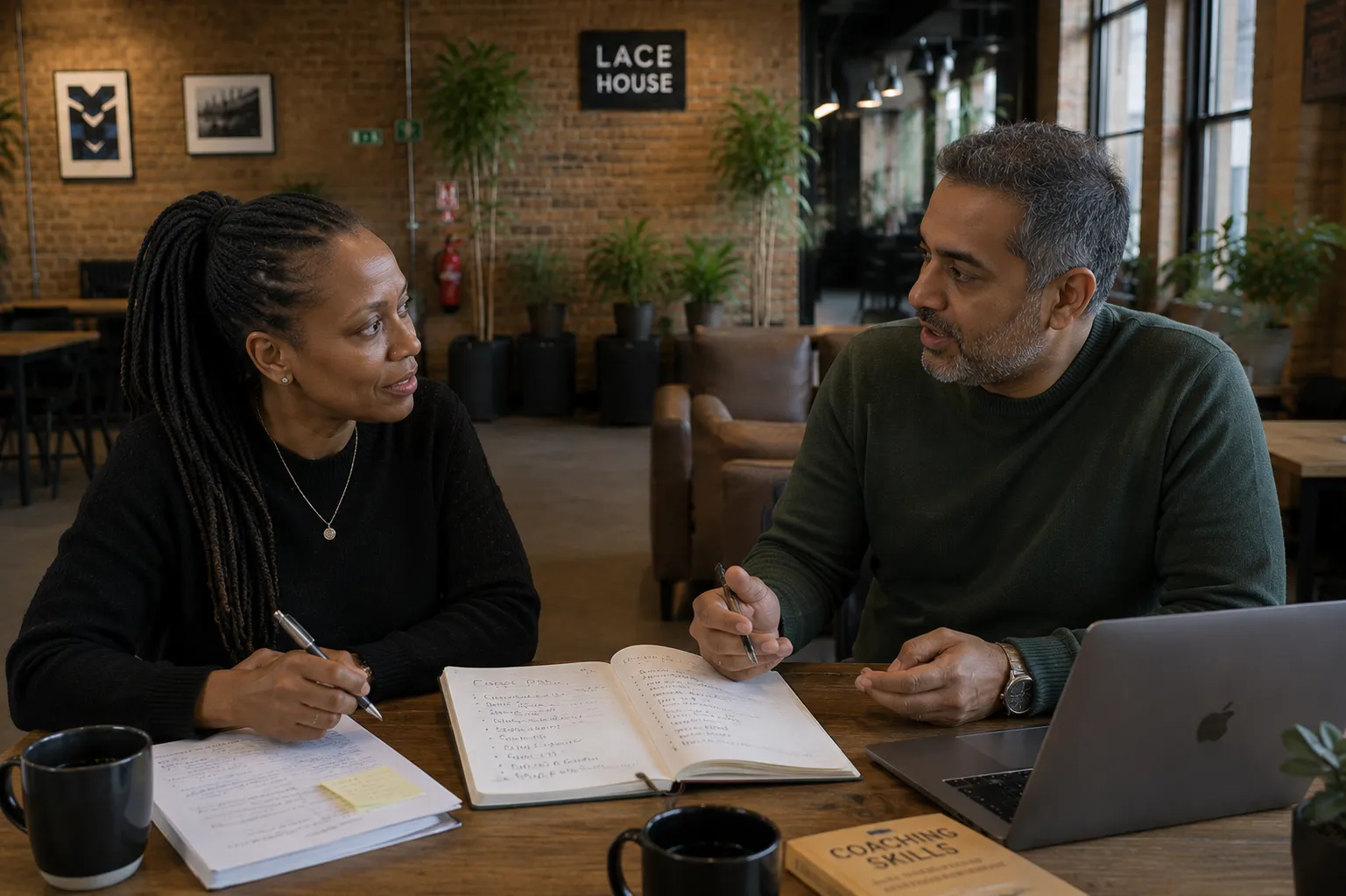
Talking things through with someone who can help you think clearly can make a significant difference. In particular, a career change coach can help you make sense of what you want, explore fulfilling and realistic options for your stage of life, and make career change a reality.
Changing career at 40 isn’t about starting from zero.
You carry experience, judgement, and transferable skills with you, even if you move into something quite different.
The question isn’t whether you can afford to change at all.
It’s how to do it in a way that respects both the life you’ve built and the fact that something in it needs to evolve.
If you’re thinking about changing career at 40, it’s usually for a reason.
Ignoring that feeling doesn’t tend to make it go away.
But acting on it doesn’t have to mean blowing everything up either.
With a bit of structure, some honest reflection, and a willingness to explore before committing, it’s possible to move towards something that fits better, without taking unnecessary risks along the way.
Follow us on social media: