Thriveherd blog
Get practical insight on career change, confidence and purposeful work.
Short, thoughtful emails without noise. Unsubscribe anytime.

Navigating the world of job applications can be daunting, especially when crafting a cover letter without concrete, relevant experience. Many job seekers find themselves wondering how to present their qualifications compellingly without a traditional work history to draw from. Contrary to popular belief, writing an impressive cover letter is entirely possible, even for those entering the workforce for the first time.
The secret lies in leveraging your unique attributes. By highlighting your skills, showing genuine enthusiasm, and expressing a strong willingness to learn, you can position yourself as a desirable candidate. This approach transforms what might seem like a lack of experience into an opportunity to showcase your potential and readiness to grow. As you embark on this journey, remember that a well-crafted cover letter is not just about listing past roles; it’s about demonstrating how you can contribute meaningfully to the company you’ll join.
A cover letter is an important addition to your CV or resume. It gives you a chance to show your qualifications and personality in a way that a CV can’t. While a CV lists your experiences and skills in a structured way, the cover letter lets you tell a story that grabs the attention of potential employers.
Think of the cover letter as your opportunity to highlight aspects of your background that don’t fit neatly into bullet points. It’s where you explain how your experiences, whether formal or informal, have prepared you for the role you’re pursuing.
This matters even more when you do not have direct experience on paper. In that situation, your cover letter does some of the heavy lifting. It helps employers see your thinking, your communication, your motivation, and the reasons you may still be a strong fit.
Yes, absolutely.
A lack of direct experience is not the same thing as having nothing to offer. Most people early in their career, returning after a break, or moving into a new field underestimate how much relevant evidence they actually have.
You may not have done the exact job before, but you may still have developed useful strengths through education, volunteering, personal projects, part-time work, caring responsibilities, extracurricular activities, or life experience. Employers are often looking for more than a perfect paper match. They are looking for signs that someone can learn, contribute, communicate well, and take the role seriously.

When employers read a cover letter from someone without direct experience, they are usually asking a handful of underlying questions:
That means your task is not to apologise for what you lack. It is to help the employer see what you do have, and why it matters.
A strong cover letter still needs structure, even when you are early in your career or changing direction.
Start by saying which role you are applying for and why it caught your attention. Keep it direct and specific.
Show genuine interest in the company or the opportunity. This is where a little research helps. Mention something about the organisation, its values, its work, or the nature of the role that actually connects with you.
Even if you do not have direct experience, you can still talk about strengths that matter. These may include communication, organisation, teamwork, reliability, initiative, customer service, problem-solving, adaptability, writing, or attention to detail.
This is important. Don’t only say you are hardworking or eager to learn. Show evidence. Refer to a project, a course, a volunteering experience, a responsibility you have held, or a situation where you demonstrated the quality you are claiming.
Finish by reinforcing your interest, expressing appreciation for their time, and stating that you would welcome the opportunity to discuss your application further.

If you have no direct experience, transferable skills become especially important.
These are strengths you have developed in one context that can still be useful in another. For example:
The point is not to stretch the truth. It is to recognise that relevance is often broader than job titles.
A lot of cover letters fall flat here. People say they are passionate, enthusiastic, or excited, but give the employer very little to hold onto.
If you want enthusiasm to sound credible, attach it to something concrete. For example:
Specificity makes motivation believable.
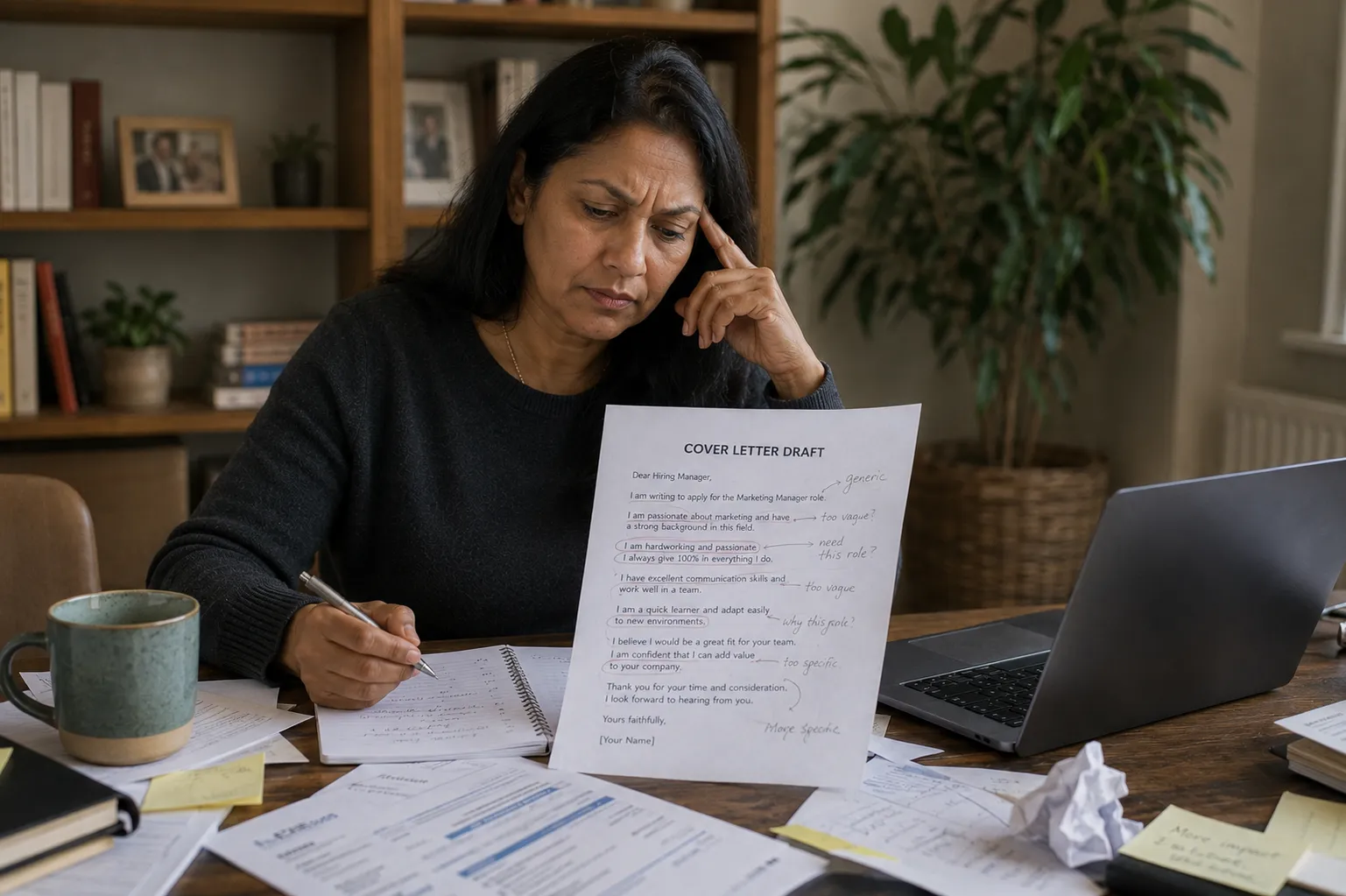
There are a few mistakes that tend to weaken cover letters, particularly when someone feels underconfident about their experience.
Employers can already see from your CV that you do not have direct experience. You do not need to keep repeating it. Acknowledge the situation briefly if needed, then move quickly to what you bring.
A vague letter that could be sent to any employer usually reads as low-effort. Tailor it.
Your cover letter should complement your CV, not duplicate it.
Your letter should connect your background to the employer’s needs. It is not only about why you want the job, but why hiring you could make sense for them.
A cover letter should be focused and easy to read. Usually, one page is enough.
A cover letter should look professional and be easy to scan.
A simple format usually includes:
Keep the font clear, the layout tidy, and the tone professional. If you know the hiring manager’s name, use it. If not, a respectful general greeting is fine.
If you are not sure where to begin, this structure usually works well:
State the role you are applying for and briefly say why you are interested.
Explain what relevant strengths, skills, or experiences you can bring, even if they were developed outside a direct professional role.
Connect your background to the employer’s needs and show that you understand what makes the opportunity appealing.
Close positively and express interest in discussing your application further.
If you are struggling to find material, think about examples from:
These do not replace direct experience, but they can still give employers meaningful evidence of your strengths.
Some applicants assume cover letters are outdated or not worth the effort, but that is a mistake in many cases.
A good cover letter can strengthen an average application, especially when your CV does not tell the full story on its own. It can also make the difference between someone being overlooked and someone being given a chance.
If you are applying without direct experience, that chance matters.
Writing a cover letter with no experience can feel intimidating, but it is far from impossible. The goal is not to pretend you have done more than you have. It is to present yourself thoughtfully, show what you can offer, and make it easier for an employer to imagine you succeeding in the role.
Focus on your transferable skills, your willingness to learn, your motivation, and the evidence you do have. When those things are communicated clearly, a lack of direct experience does not have to be the thing that defines your application.
Follow us on social media: