
Thriveherd blog
Get practical insight on career change, confidence and purposeful work.
Short, thoughtful emails without noise. Unsubscribe anytime.

The job application process can be tough, especially when trying to figure out the different purposes of a CV and a cover letter. Both documents are used to showcase your qualifications, but they each have their own specific roles in impressing potential employers.
Knowing the differences between these two documents is essential for creating effective job applications. This article will explore CVs and cover letters, explaining their individual purposes, main distinctions, and best practices for writing each. By the end, you'll have a better understanding of how to use both tools to improve your chances of landing a job.
A Curriculum Vitae (CV) is a comprehensive document that provides an extensive overview of your career achievements and professional qualifications. Typically utilized in academic, educational, scientific, or international job applications, a CV offers a detailed account of a candidate's professional journey. Common sections in a CV include:
The cover letter serves as an introduction to your CV, presenting the purpose behind your application. It personalizes your submission by conveying enthusiasm for the role and highlighting how your skills align with the company's needs. A typical structure of a cover letter includes:
The format of a CV can vary significantly across different regions. For example, in the United States, it tends to be more detailed and lengthy, whereas European versions might be more concise, sometimes limited to one or two pages.
A personalized approach in cover letters is crucial as it demonstrates genuine interest and effort tailored towards each specific role. Customizing content shows employers that you've researched their company and understand their needs, setting you apart from those who use generic templates.
By understanding these foundational elements, you're better equipped to distinguish between a cover letter or CV and leverage each effectively in your job search endeavors.
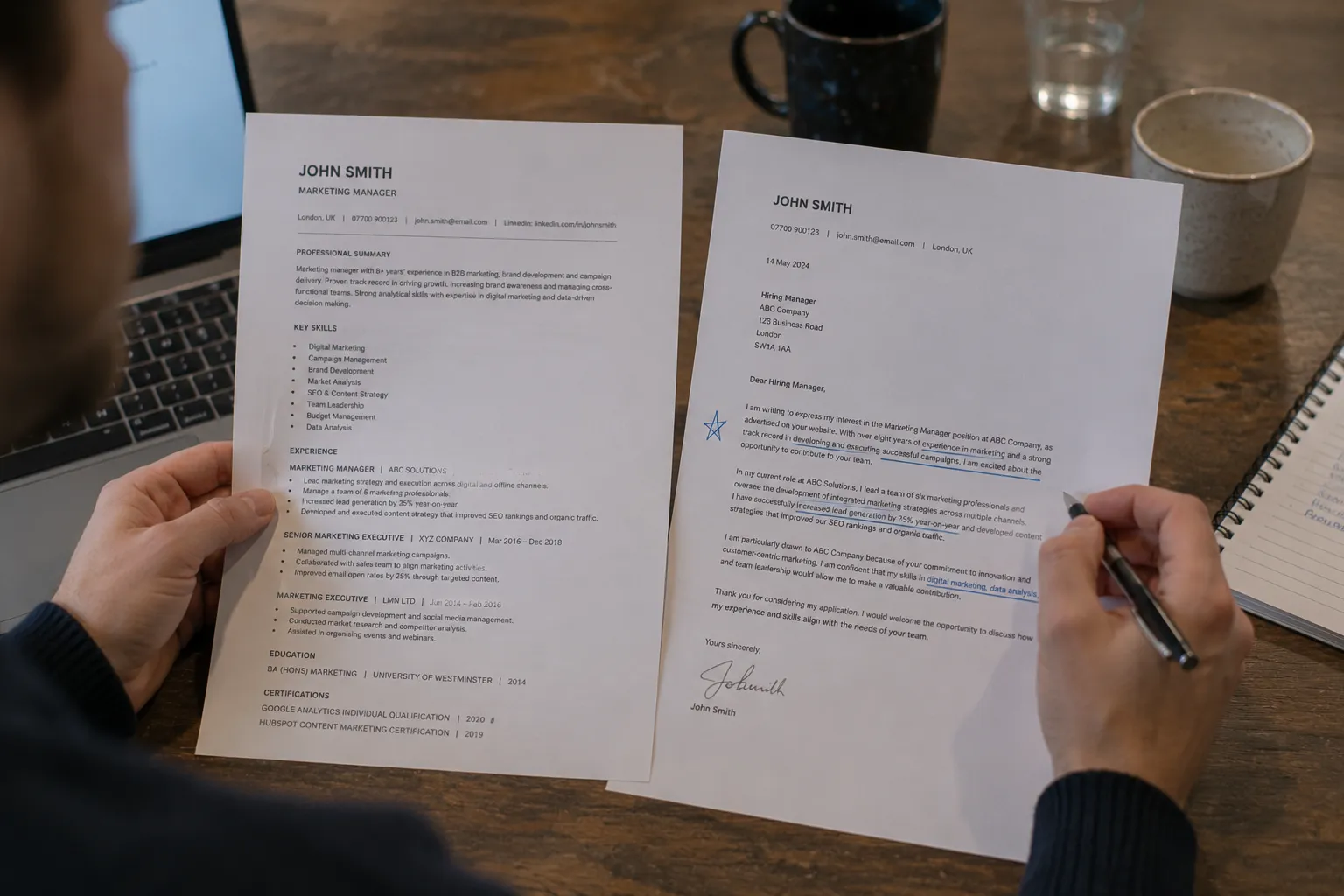
Understanding the distinctions between a CV and a cover letter is crucial to crafting an effective job application. Here’s what sets them apart:
A CV is typically more extensive than a cover letter:
The tone and style of these documents differ significantly:
Each document has a unique visual structure:
Customization is essential for both documents but manifests differently:
Recognizing these key differences between a cover letter vs CV will help you create stronger job applications by using each document effectively. Each serves its own purpose but together they provide a comprehensive picture of your qualifications and suitability for a role.
Understanding the similarities between a CV and a cover letter is crucial for crafting a cohesive job application. Here are some key points where these documents align:
A CV and cover letter both function as personal marketing tools designed to showcase your qualifications, experience, and suitability for the role. They are your first opportunity to make an impression on a potential employer.
Customizing both documents for each specific job application is essential:
Tailoring shows that you have taken the time to understand the role and how your background aligns with it.
The presentation of your CV and cover letter speaks volumes about your professionalism:
These similarities underscore the importance of using both documents strategically. A well-crafted CV paired with a personalized cover letter can significantly enhance your job application by providing a complete picture of who you are as a professional.

Understanding when to use a CV, a cover letter, or both is crucial in the job application process. Employer expectations can vary widely depending on the industry, role, and specific company requirements.
A CV is typically required for:
These documents provide a comprehensive overview of your professional history, skills, and accomplishments.
A cover letter is often expected for:
It allows you to introduce yourself personally and explain why you're the ideal fit for the specific role.
Hiring managers often follow a strategic approach:
Understanding this can help tailor your application effectively.
Even if a cover letter isn't explicitly requested, it can still add value:
Knowing whether to submit just a cover letter vs resume, or both, can make a significant difference. A tailored application strategy not only meets employer expectations but also enhances your chances of standing out.
Understanding how employers interpret each document during the shortlisting process can significantly impact your job application strategy.
Employers often use CVs as a primary tool for initial screening. A CV provides a comprehensive overview of your professional history, education, skills, and achievements. Key elements employers focus on include:
A cover letter serves a different purpose. Employers use it to assess:
Contradictions between your CV and cover letter can raise red flags. Inconsistencies such as differing job titles, dates, or claims about skills may lead employers to question your attention to detail or honesty. Ensuring alignment between both documents is crucial for maintaining credibility.
A well-crafted cover letter can amplify the impact of a strong CV by:
Employers interpret these documents together to form a holistic view of your candidacy. Effective alignment between them enhances your chances during shortlisting.

Confusing CVs and cover letters can lead to several common mistakes that may harm your job application.
One frequent error is simply restating the information already present in your CV within the cover letter. This redundancy wastes valuable space and fails to provide additional context or insight. Instead, use the cover letter to highlight specific experiences and explain how they directly relate to the job you're applying for.
A generic cover letter can be a major turn-off for employers. It suggests a lack of genuine interest in the role and the company. Tailor each cover letter to the specific job by mentioning the company name, referencing the job description, and addressing how your unique skills and experiences make you an ideal fit.
Your CV should be concise and focused on factual information. Overloading it with narrative explanations can make it cluttered and difficult to read. Save detailed stories and personal motivations for the cover letter, where they can add value without overwhelming the reader.
Consistency between your CV and cover letter is crucial. If the tone or information differs significantly between the two, it can create confusion or raise concerns about your attention to detail. Ensure that both documents present a cohesive professional image, with aligned dates, roles, achievements, and overall style.
Avoiding these common pitfalls will help you create more effective application materials that clearly distinguish between the roles of a CV and a cover letter.
Creating a cohesive and compelling job application requires both your CV and cover letter to work together seamlessly. Here are some effective CV tips and cover letter writing strategies to help you present yourself as a strong candidate.
Your CV and cover letter should reinforce the same core message about your value as a candidate. If your CV emphasizes strategic leadership, your cover letter should build on that theme with relevant examples and narrative. Matching language and priorities across both documents creates a stronger and more coherent impression.
A practical approach is:
Treating your CV and cover letter as a pair rather than separate tasks can greatly improve the quality of your application.
Examining examples can clarify how a CV and cover letter function together in a job application.
A strong CV sample for a job application might include:
For cover letters, reviewing different samples of a cover letter can provide insights into how to convey your personality and enthusiasm. Key elements include:
Comparing these samples allows you to see how each document serves its distinct purpose. The CV offers an extensive view of your qualifications, while the cover letter provides context and personal connection. Both are essential in painting a comprehensive picture for potential employers.
Follow us on social media: