Choosing a career coach isn’t always about credentials – it’s about finding the right approach, fit and way forward for you.
Read moreNobody needs a career coach.
But working with the right one can be life-changing.
That means the real question is not whether coaching is necessary, but whether it would add meaningful value in your situation.

For that, you need to understand what problem you are actually trying to solve.
Not all career coaches work in the same way.
Coaches are not there to give you answers, advice or quick fixes. They are there to help you make your own decisions, take action, and build clarity over time.
So choosing well is less about comparing options, and more about finding the kind of support that fits you.
Two people can hire equally qualified coaches and have completely different outcomes, depending on whether the support actually matches what they need.
Before choosing a coach, it’s worth making sure coaching is actually the right kind of support for your situation.
Most people look for a coach before they are clear on their own situation.
In practice, there are a few common scenarios:
Coaching is not about being told what to do. It is about working through these problems so that you can make decisions you are confident in and act on them effectively.
The type of coaching you need depends on this.
If you are unsure whether coaching is even the right step, it may help to start here:
Many people look for a "career coach" because it is the most familiar term.
But in practice, what they actually want is not always coaching in the strict sense.
Some people want:

This matters more than most people realise.
If you choose a highly credentialed coach who works in a strictly non-directive way, but what you actually need is a more blended, practical or guidance-led approach, the fit may be poor – even if the coach is highly qualified.
There is also a difference between:
Some coaches work across these areas. Others specialise more narrowly.
If you are considering a change in direction, it is important to understand how different approaches handle that:
👉 Career coaching vs. career change coaching
Choosing the wrong type of support is one of the most common reasons coaching does not work.
The key is not to choose a label, but to understand what kind of support will actually help you move forward.
Qualifications can be useful, but they are not enough on their own.
There is also an important distinction:
Seeking a coach with accredited training is generally sensible. It suggests a baseline of quality and professional standards.
Credentials are different. They indicate that a coach works in a particular way, in line with that body’s methodology. That approach may or may not be right for your situation.
In career work, many clients prefer a blend of coaching and more directive input (for example, elements of mentoring, guidance or structured exploration). Some credentialed coaches will stay strictly within a non-directive coaching model, which can be useful in some situations but limiting in others.
This means that prioritising credentials above all else can sometimes take you further away from the right match.
What matters more is:
This is also why initial conversations or consultations are important. They give you a clearer sense of how the coach actually works, beyond what their credentials suggest.
This is where it's easy to commit to something that won't be right for you.
Make sure you ask:
Coaches should not usually be giving you direct advice or solutions. Their role is to help you think more clearly, challenge your assumptions, and take meaningful action.

Many coaching approaches focus primarily on conversation. Others, including more structured approaches, combine coaching with tools and guided exploration.
Some people need flexibility. Others need structure.
At Thriveherd, this is not an either/or choice. We combine non-directive coaching with practical career tools that help you generate options, assess them properly and work with real information. The coaching supports your thinking and decision-making, while the tools provide substance and direction. The two are designed to work together, so you are not left choosing between “talking it through” and actually building viable options.
The right choice depends on how you work best.
Coaching is not just technical. It is relational.
You are looking for someone who:
Because coaching is not about being given answers, fit matters more than most people expect.
You need to feel that:
This is difficult to assess from a website alone.
A consultation or initial conversation is usually the best way to judge fit.
Good coaching should lead to:
But it is less about "evidence" in the form of case studies, and more about how progress is created and managed in your own situation.
Every client is different. While examples and testimonials can be useful, they are not a reliable guide to what your outcome will be.

What matters more is whether the coach has a clear way of helping you make progress.
It's a good idea to ask:
Coaching should not be a vague, ongoing series of conversations with no clear direction. Nor should it be a rigid process that ignores what comes up in real time.
In practice, effective coaching sits somewhere in between:
At the same time, coaching is often emergent. Conversations frequently uncover something important that was not obvious at the start, and the plan needs to adapt accordingly.
A good coach will balance both:
You are not looking for guarantees or borrowed examples of success. You are looking for a process that helps you make decisions, take action, and build progress in a way that stands up over time.
Be cautious if a coach:
Coaches' fees vary widely.
More important than the price itself is:
The right match is what leads towards or away from success, not the fee.
It is often better to invest more in the right support than to save money and make no meaningful progress.
That does not mean that more expensive is always better, only that cost should be seen as less important than connection, trust and outcomes.
Coaches' fees vary widely.
Many people hesitate to commit to a package of sessions.
Occasionally, ad hoc coaching can work. But where your goal can reasonably be thought of as a project (for example, gaining clarity, making a transition, or working through a defined challenge), a package is often more effective.
A good package should not be excessive. It is usually better to start with a focused number of sessions, with the option to add more if needed, rather than committing to more than you will use.
In a consultation or proposal, it is reasonable to ask why a specific number of sessions has been recommended.
Packages tend to work better because they:
By contrast, more tentative or ad hoc approaches can make it harder to build momentum, maintain accountability, and achieve a clear outcome.
You can simplify the decision by asking:
If the answer to all four is yes, you are likely making a good choice.
At Thriveherd, we do not expect you to work all of this out alone.
We prioritise transparency and fit above all else, because the wrong match helps nobody – not you, and not us. We will give you an objective view of what we believe is the best way forward based on your situation, whether we offer support for it or not. If it is not a fit, we will try to signpost you to the kind of support that is more likely to help. If it is a fit, we will talk openly about the approach and next steps, and you can ask as many questions as you like – the aim is for you to make a decision you are genuinely comfortable with.

A career consultation is designed to help you:
From there, support can be tailored or structured depending on your needs, and can adapt as your situation evolves.
We offer coaching, mentoring, and hybrid approaches, because what matters is not what the support is called, but whether it helps you make decisions, take action and move forward effectively.
One of the most significant differences between working with a single coach and working with a team is flexibility.
With a solo coach, everything depends on that one relationship. If the fit is not right, or your needs change, there are limited options.
At Thriveherd, clients are matched to a coach through a two-step process (consultation and chemistry call) so you can assess fit before committing. In most cases, that match works well.
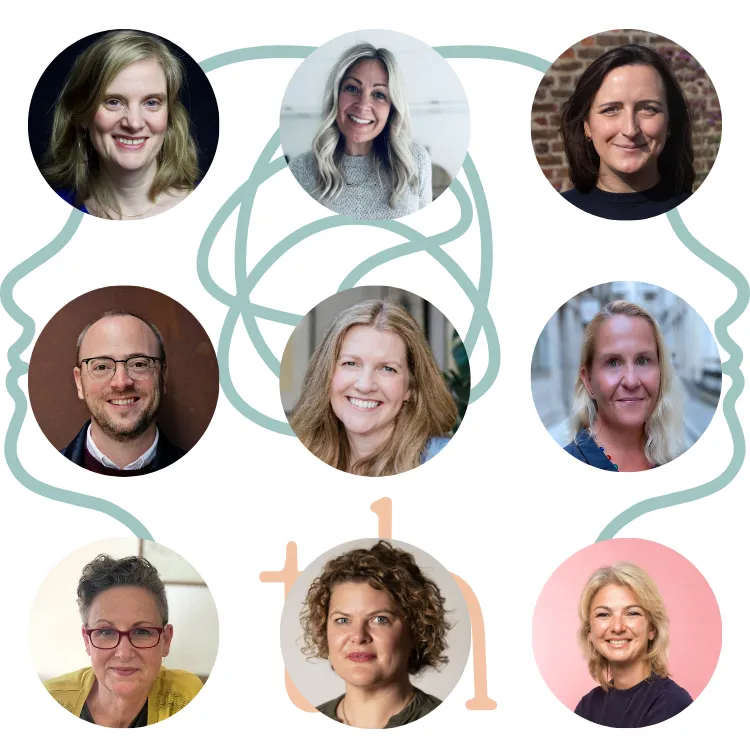
However, having a team means you are not locked into a single approach:
In reality, most coaches are stronger in some areas than others. Almost no individual has deep expertise across every aspect of career development.
A multi-specialist model allows you to access the right expertise at the right time, rather than trying to fit everything into a single coaching relationship.
The result is a more flexible, responsive process that can adapt as your situation becomes clearer and your goals develop.
We are always transparent and honest – that is our priority. Our aim is not to 'sell' coaching where it is not needed, but to help you move forward in a way that makes sense.
If you feel coaching could be useful, but are not completely sure:
If you'd like an initial conversation to talk through your situation, work out if coaching is right for you – and create a coaching plan if so:
If you are still unsure, or you're not quite ready for a chat yet, take a few minutes to request a free review of your situation from our coaching team: